


Smart Farming: Precision & Organic Guide.

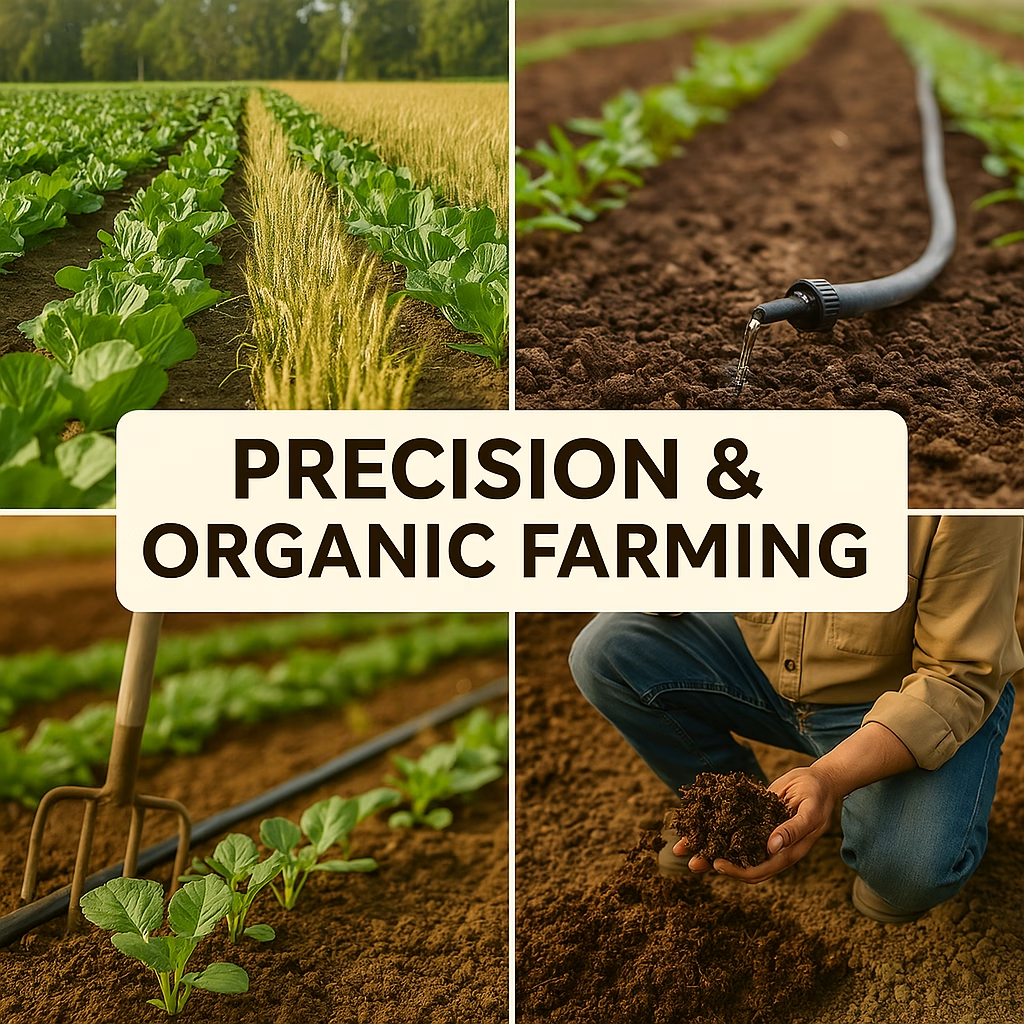
🌾 The Future of Indian farming is here: it’s a blend of precision & organic practices
Indian farmers face many challenges today. For instance, input costs are rising. Rainfall can be erratic, and soil fertility is declining. There is, however, a powerful solution. This involves a hybrid approach. This approach combines advanced precision farming tools with time-tested organic farming practices.
At Krushi Vikas, we believe in sustainable success. Therefore, this guide is your complete roadmap to this smart farming blend. We will show you how to:
- Boost yield with data-driven irrigation. Our specialized sprayers are perfect for this.
- Restore soil health with quality organic inputs. This includes products like Bhumi Gold.
- Reduce pest pressure effectively. You can do this through strategic crop rotation. Targeted organic solutions, like Red Killer and SWEP Fungicide, also help.
Ultimately, let’s sow smarter and grow stronger, together.
🔍 What is Precision Farming?
Precision farming is a technology-driven approach. It delivers the right input to your crops. This includes water, fertilizer, or pesticide. More specifically, it delivers these at the right time and in the right place. This method greatly minimizes waste. Consequently, it maximizes yield.
Key Components of Precision Farming:
- Drip Irrigation: This system delivers water directly to plant roots.
- Soil Testing: This process determines the exact nutrient needs of your soil.
- GPS Mapping: This technology tracks field variability with great accuracy.
- Sensors & Drones: Furthermore, these tools efficiently monitor crop health.
- Variable Rate Application: Here, inputs are adjusted precisely per zone. This reduces overuse.
Why Precision Farming Works for You:
Precision farming offers tangible benefits. For instance, it can reduce input costs by 20–30%. Simultaneously, it can increase yield by 15–25%. Therefore, this approach makes your farm more profitable and efficient.
🌿 What is Organic Farming?
Organic farming, in contrast, avoids synthetic chemicals. Its core focus is on natural soil enrichment. It also emphasizes biological pest control and fostering crop diversity.
Core Practices of Organic Farming:
- Crop Rotation: This is a cornerstone for preventing nutrient depletion.
- Organic Fertilizers: Farmers use natural inputs. These include compost, vermicompost, and biofertilizers.
- Drip Irrigation: Even in organic systems, drip irrigation is vital for water efficiency.
- Mulching & Green Manure: Moreover, these practices significantly enhance soil health.
- Biological Pest Control: Natural methods are used to manage pests effectively.
Why Organic Farming Works for You:
Organic farming delivers long-term benefits. Specifically, it significantly improves soil structure. It also boosts microbial life within the soil. Furthermore, it reduces chemical residue in food. This results in healthier produce. Ultimately, it leads to a more robust farm ecosystem.
🔁 Crop Rotation: The Foundation of Soil Health
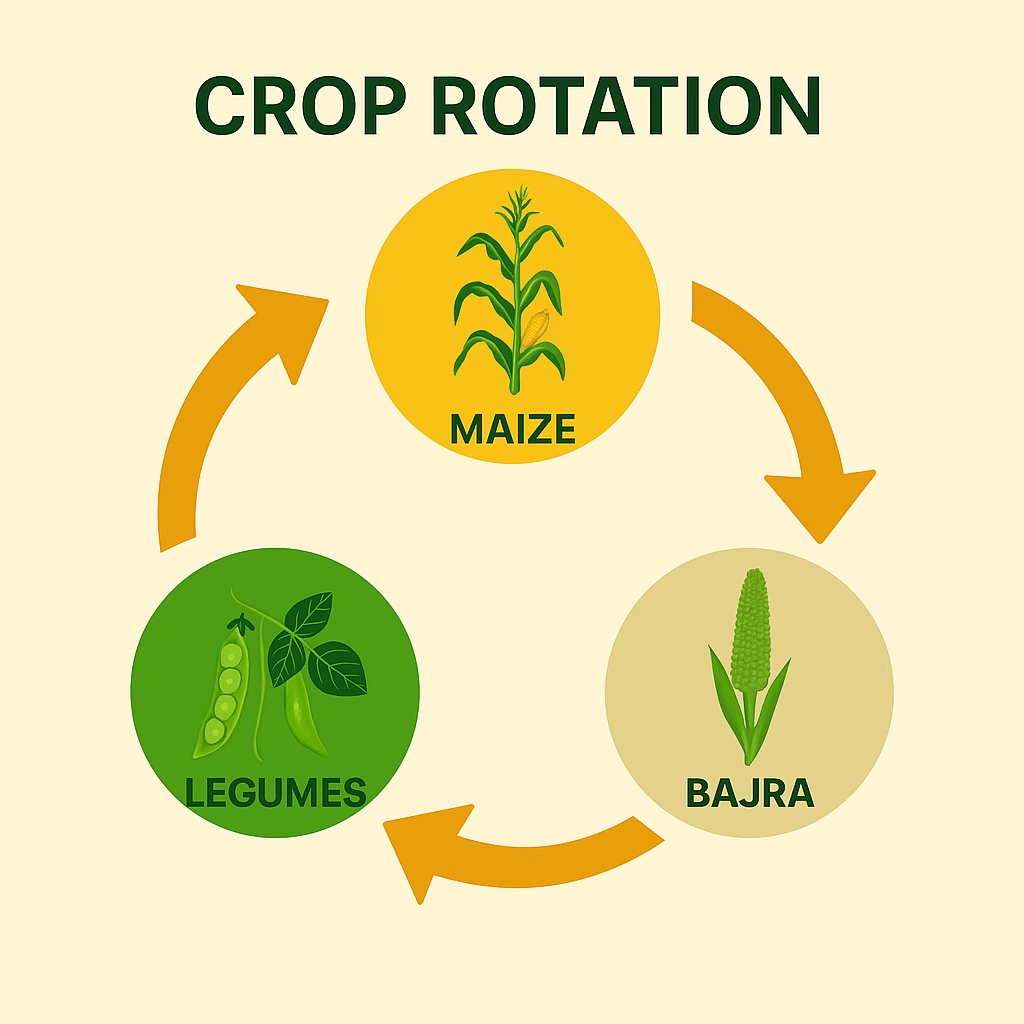
Crop rotation is a fundamental practice in organic farming. It involves growing different crops in the same field. This happens across successive seasons. This strategic method prevents nutrient depletion. Moreover, it controls pest buildup naturally.
Benefits of Effective Crop Rotation:
- Prevents Soil Nutrient Exhaustion: Different crops utilize different nutrients. Thus, rotation ensures a balanced nutrient uptake.
- Reduces Pest and Disease Pressure: By changing crops, you break the life cycles of specific pests and diseases.
- Improves Soil Structure and Aeration: Varying root systems enhance the physical properties of the soil.
- Enhances Yield Over Time: Healthy soil and reduced pest issues lead to consistently better harvests.
Example Rotation for Indian Conditions:
Here’s a simple yet effective crop rotation strategy:
| Year | Crop | Benefit |
| Year 1 | Maize | High nitrogen demand |
| Year 2 | Legume (e.g., moong) | Fixes nitrogen, enriches soil |
| Year 3 | Bajra or Cotton | Breaks pest cycle, different nutrient needs |
💧 Drip Irrigation: More Crop Per Drop
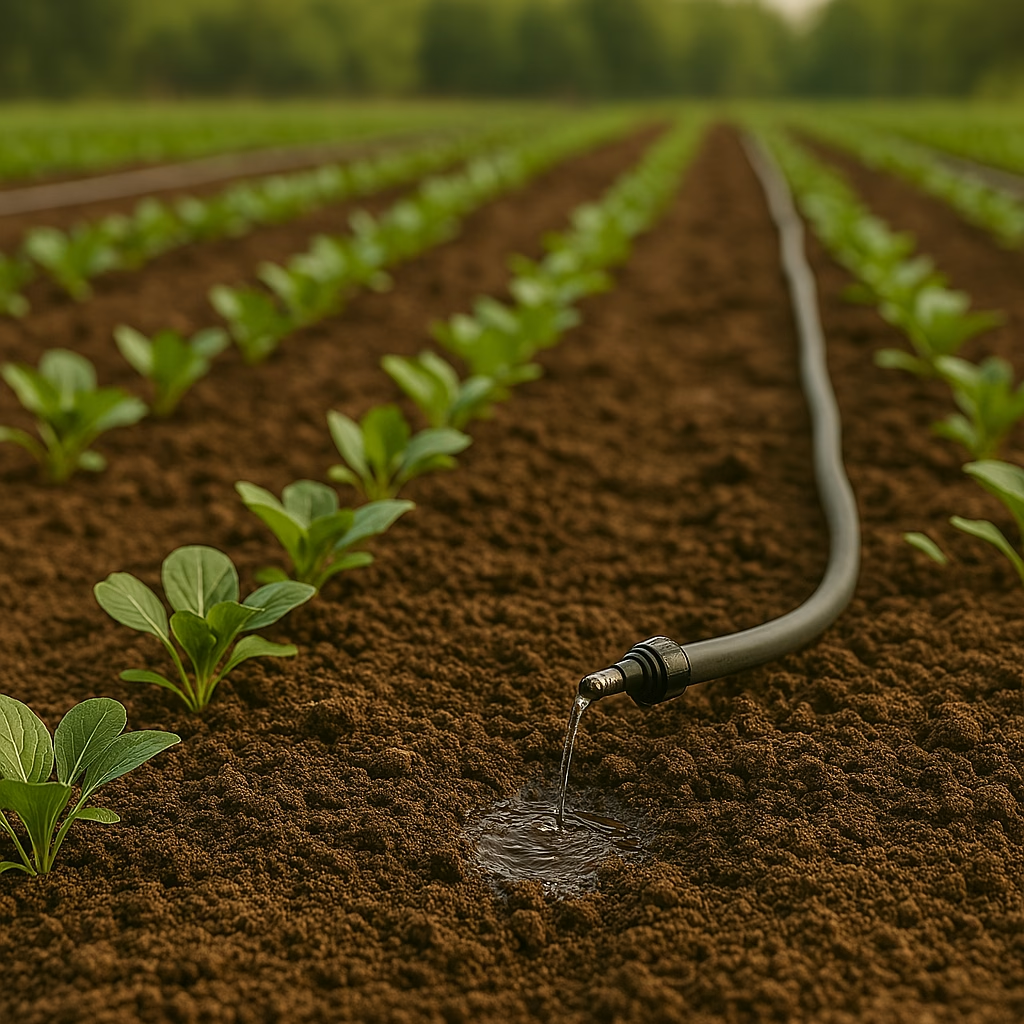
Drip irrigation is a core precision farming technique. It delivers water directly to the root zone of plants. This means water goes precisely where it’s needed. This method significantly reduces evaporation and runoff. Indeed, it is far more efficient than traditional irrigation.
Key Advantages of Drip Irrigation:
- Water Conservation: Drip systems can save a remarkable 30–50% of water. This is crucial for sustainable farming in India.
- Reduced Weed Growth: Water is applied only to the plant’s base. Therefore, it minimizes moisture for weeds in non-cropped areas.
- Improved Fertilizer Efficiency: Fertilizers can be mixed with the irrigation water. This process is called fertigation. It delivers nutrients directly to the root zone, thus reducing waste.
- Works on Uneven Land: Drip systems are adaptable to various topographies. This is unlike flood irrigation.
Krushi Vikas Tools for Efficient Irrigation:
For seamless drip irrigation and overall water management, Krushi Vikas offers reliable solutions. These include:
- Krushi Vikas Drip Irrigation System Water Timer Digital Controller: This fully automatic controller helps you manage your irrigation schedule with precision. It saves both time and water. Get Your Drip Irrigation Water Timer Here
- Krushi Vikas 16L Battery Operated Single Motor Agriculture Spray Pump (12V 8Ah): This is a popular choice for balanced performance and mobility. Explore the 16L Single Motor Sprayer
- Krushi Vikas 20L Large Capacity Double Motor Spray Pump (12V 14Ah): This model is ideal for larger areas. Moreover, it offers more power and capacity for extensive fields. See the 20L Double Motor Sprayer
- Tusmad 360° Rotating 3-Arm Lawn Water Sprinkler: This is an efficient option for broader area coverage. It ensures even water distribution for different needs. Get Your Automatic Lawn Sprinkler Here
- HTP Tractor Pump: For very large farms, this provides high-pressure spraying capabilities for efficient coverage.
🌿 Organic Fertilizers: Feed the Soil, Not Just the Plant
Organic fertilizers are fundamental to organic farming. They improve soil fertility without harming the environment. Indeed, their goal is to feed the soil’s microbial life. This, in turn, feeds your plants.
Types of Organic Fertilizers and Their Benefits:
| Fertilizer Type | Source | Key Benefit |
| Bhumi Gold | Humic acid (Krushi Vikas product) | Enhances root growth, boosts nutrient uptake |
| Vermicompost | Earthworm castings | Rich in beneficial microbes, improves soil structure |
| Neem Cake | Neem seed residue | Provides nitrogen, acts as a natural pest deterrent |
| Biofertilizers | Rhizobium, Azotobacter, etc. | Fixes atmospheric nitrogen, solubilizes phosphorus |
Export to Sheets
Application Tips for Organic Fertilizers:
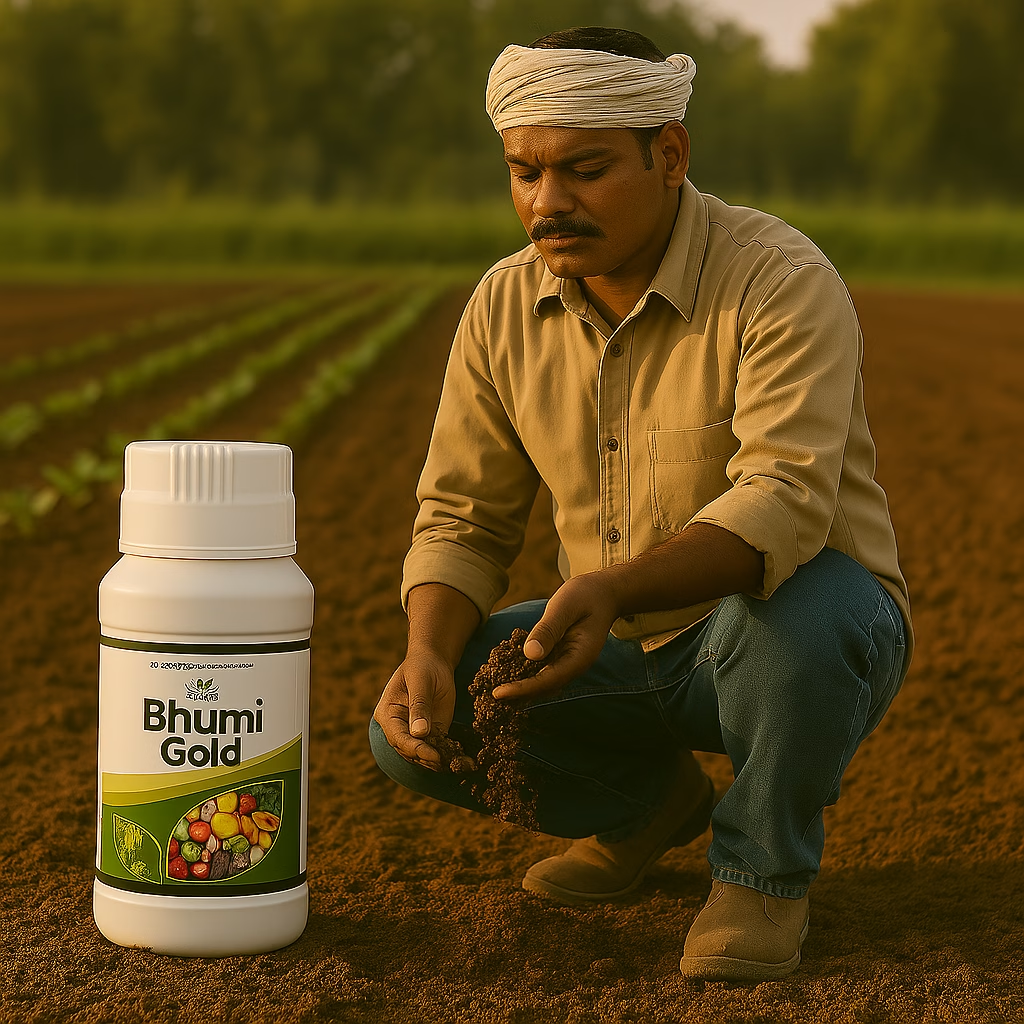
- Bhumi Gold: Mix Bhumi Gold at 5 kg per acre. Combine it with your farmyard manure (FYM) or compost. This practice provides a powerful boost to early plant vigor and overall soil health. Get Krushi Vikas Bhumi Gold Here for a Germination Boost!
- Fungal Protection: For comprehensive fungal protection, especially important in organic systems, consider using SWEP Fungicide. Always apply it as directed to safeguard your crops. Shop Krushi Vikas Fungicide Here
- Sucking Pest Control: Combat sucking pests effectively with Red Killer. This product helps protect your plants naturally. Protect Your Crops with Red Killer
🌾 Real-World Success: A Farmer’s Story from Surendranagar
Let’s look at a practical example from a farmer in Surendranagar. Farmer: Sureshbhai Rotation: He effectively implemented a Cotton → Bajra → Moong rotation. This cycle broke pest lifecycles. Furthermore, it improved soil health. Inputs: Sureshbhai primarily relied on:
- Drip irrigation for precise water delivery.
- Bhumi Gold + FYM for enriching his soil organically.
- Red Killer + SWEP for natural pest and fungal protection.
Sureshbhai’s Remarkable Results:
His integrated approach yielded impressive outcomes:
- He achieved a 2x yield increase in Bajra.
- He reported 40% water savings. This clearly demonstrated the efficiency of drip irrigation.
- Moreover, he saw a 60% reduction in pest sprays. This was thanks to crop rotation and organic pest management.
Sureshbhai’s story highlights the tangible benefits of combining precision and organic farming practices. Indeed, his success can inspire others.
📣 Your Path to Sustainable Farm Prosperity with Krushi Vikas!
Embrace the future of farming. Do this by integrating precision and organic practices. This approach ensures both high yields and long-term sustainability. Krushi Vikas is your trusted partner on this journey.
✅ Explore Our Products Designed for Smart Farming:
- Organic Fertilizers & Soil Conditioners: Nurture your soil naturally. Explore Krushi Vikas Soil & Plant Nutrition
- Drip Irrigation Systems & Sprayers: Achieve “more crop per drop.”
- Bhumi Gold: Boost your soil’s vitality and crop health. Get Bhumi Gold for Soil Health
- Red Killer & SWEP Fungicide: Protect your crops effectively and sustainably. Use Red Killer / Get SWEP Fungicide
- Weed Management: Keep your fields clean. Get Glymol Weed Remover
📲 Need Expert Advice? Chat with Krushi Vikas Directly!
Have questions about implementing these practices on your farm? We’re here to help. Connect directly with our Krushi Vikas experts on WhatsApp! Call us at 8000004423. Your success is our mission.
❓ FAQ Block: Common Questions Answered
Q1: Can I use drip irrigation with organic farming? A: ✅ Yes! Drip irrigation is ideal for organic systems. It reduces water waste. Furthermore, it precisely delivers water to the root zone, supporting healthy microbial life in the soil.
Q2: How often should I rotate crops for best results? A: For optimal benefits, aim to rotate crops every 1–2 seasons. Moreover, always avoid planting crops from the same family back-to-back in the same field.
Q3: Are organic fertilizers sufficient for high yield in precision farming? A: ✅ Yes, absolutely. When organic fertilizers are combined with strategic crop rotation, efficient drip irrigation, and timely, targeted pest control, they can certainly support high yields comparable to conventional methods.
🔗 External References for Further Reading:
- Precision Farming in India: Centre for Energy, Environment and Water (CEEW)
- Benefits of Organic Farming: Vajiram & Ravi
- Crop Rotation Benefits: Greentumble
- For general agricultural information: Indian Council of Agricultural Research (ICAR)
- For organic farming policies: National Centre of Organic Farming (NCOF)
About the Author: This comprehensive guide has been meticulously compiled by the experienced agricultural experts at Krushi Vikas. Drawing upon years of practical field experience, in-depth research, and a deep understanding of Indian farming conditions, we strive to bring you the most effective and practical solutions to help you achieve your farming goals. Your prosperity fuels our mission.